AI & Automation
Half the pitches for AI chatbots promise the world. The other half pretend they're all the same. Here's an honest look at what a well-built chatbot does for a small business in 2026 — and what to ignore.
Every SaaS company in the world will sell you an AI chatbot in 2026. The pitch is always the same: it answers questions, captures leads, works 24/7, and will transform your business. Half of those claims are true. The other half depend entirely on which chatbot you actually deploy and how it's configured.
Here's an honest breakdown of what a well-built AI chatbot does for a small business, what it doesn't do, and how to separate the genuinely useful ones from the generic widgets that just frustrate your visitors.
A well-configured chatbot on a small business website does four concrete things, all of which are measurable in the first 30 days of deployment.
Answers repetitive questions instantly. Hours, pricing ranges, service areas, booking process, what's included, how to prepare — whatever the questions are that your team answers ten times a day. The bot handles them in seconds, at any hour, in the visitor's language.
Captures after-hours leads. Half of small-business web traffic happens outside business hours. Without a chatbot, those visitors bounce. With one, they get engaged, their questions get answered, and — critically — they leave a contact method before they go. This is usually the single biggest source of ROI.
Pre-qualifies inquiries before they hit your team. Instead of every form submission being "need more info," the bot gathers budget range, timeline, project type, and specific needs. By the time your team sees the lead, you know whether to respond in 10 minutes or 24 hours.
Books appointments directly. If integrated with your booking system, the bot can move a visitor from "I'm interested" to "I have a 2pm Tuesday appointment" without any human intervention. For services where speed-to-booking is a competitive factor, this is a decisive advantage.
There are more bad chatbots on the internet than good ones. The bad ones share a few recognizable patterns.
Canned responses that don't answer the question. "I can help with that! Can you provide more details?" is not an answer. If the bot can't handle a specific, answerable question, it's a generic script with no real model behind it.
Pushes every conversation to a human. "Let me connect you with our team!" on question two defeats the purpose. A bot that routes to humans after ten seconds is just a ticketing system.
Doesn't know what the business actually does. A generic bot trained on nothing specific to your business will confidently give wrong answers. A visitor asks about your pricing and gets a link to a support page for a different product. That's worse than no bot at all.
Feels like a bot. Stilted language, slow typing animations, obviously scripted branching conversations. Modern AI chatbots in 2026 should read as a knowledgeable human who happens to be very fast.
The single biggest quality difference between chatbots is whether they're actually trained on your specific business. A generic LLM chatbot with no context will hallucinate answers and frustrate visitors. A bot trained on your services page, your FAQ, your pricing, your case studies, and your tone of voice will feel like a knowledgeable employee.
The setup process matters. A good chatbot service will spend the first hour of onboarding ingesting your content, your historical support tickets, your internal FAQs, and the questions your team actually gets. A bad one will point-and-click you to a generic template and call it trained.
If you're evaluating chatbot providers, ask one question: "What happens if a visitor asks something not in the training data?" The answer you want to hear is "It gracefully says it'll have a team member follow up, and logs the question so we can improve the training." The answer you don't want is "It makes something up."
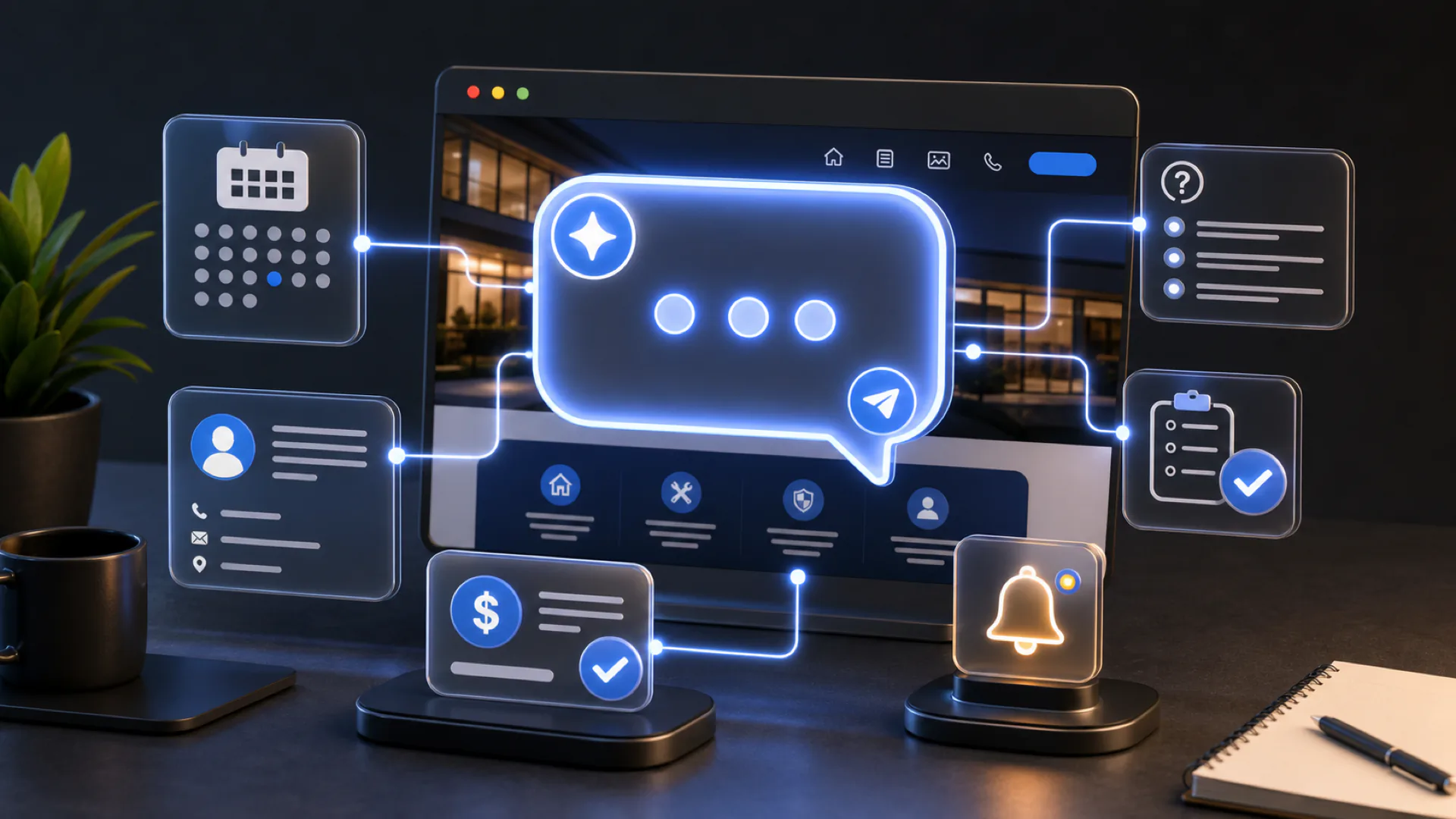
A standalone chatbot widget that floats on your website is half a solution. The other half is what happens when a conversation produces a lead — does it flow into your CRM? Does it notify your team on Slack or by SMS in real time? Does it book directly into your calendar? Does it email a followup sequence to the visitor if they leave?
The best small business chatbots are integrated with the rest of the stack, not bolted onto it. The bot captures, the CRM organizes, the email system follows up, the calendar takes the booking. One flow, no duplicated work, no copying and pasting lead info between apps.
The pricing landscape for AI chatbots in 2026 runs roughly like this:
For most Canadian small businesses, the bundled custom-trained option is the sweet spot. You get a bot trained specifically on your business, integrated with the rest of your stack, without the ongoing time cost of maintaining it yourself.
Don't put a chatbot on a site that isn't ready for it. Specifically: make sure your website clearly describes your services and pricing (the bot can only answer as well as your source material), make sure you have a place for leads to go (CRM or at minimum a real inbox someone checks), and set expectations internally about how incoming chats will be handled.
A chatbot that captures 40 leads in the first month but has nowhere for them to go is not an improvement — it's just a more efficient way to lose opportunities. The bot is a multiplier. What it multiplies depends on the foundation underneath.
Ready to act on this?
See what your site leaks after hours — every missed lead priced in dollars, plus an AI preview of your rebuilt homepage. $29.99, credited toward your first month.
Frequently asked
No, and that's rarely the right goal for a small business. The bot handles the 60-70% of inquiries that are repetitive (hours, pricing, process questions), freeing your team to focus on the higher-value conversations. You end up with faster response times overall, not fewer people.
A custom-trained bot typically takes 3-5 business days to set up if your website content is already in good shape. If it isn't, expect an extra week for content prep. Generic bots go live in an hour but deliver much less value.
Modern AI chatbots handle most major languages fluently, including English and French — which matters for Canadian businesses serving bilingual markets. Ask the provider explicitly about French Canadian support if that's relevant to your customer base.
Most modern chatbots integrate with common CRMs (HubSpot, Pipedrive, Salesforce, etc.) out of the box. If you're using a bundled website plan with built-in CRM, the integration is usually even tighter — no zaps or connectors needed.
We're building 100 complete custom websites for Canadian small businesses, plus 50% off your first month on any plan. Claim a spot before the timer runs out.

 Canadian team