AI & Automation
Everyone's talking about AI. Half of it is noise. Here's what Canadian small business owners should actually pay attention to — and what's genuinely moving the needle right now.

Everyone has an opinion about AI for business right now. Most of those opinions land in one of two camps: either AI is going to replace everything and you need to act immediately, or it's all hype and nothing actually works yet. The reality — as usual — sits somewhere more useful in the middle.
Some AI tools are genuinely moving the needle for small businesses right now. Others are overhyped, underbuilt, or just not worth the time investment yet. Here's an honest look at which is which.
The biggest misconception about AI content tools is that they're meant to replace your voice. They're not — or at least, the smart use of them isn't. The real value is in scale.
A well-built AI content pipeline can take one hour of your input — an interview, a rough outline, some notes about what you know — and turn it into a week's worth of content: a blog post, social captions, an email newsletter, and short video scripts. The AI handles the drafting; you handle the direction and the final review.
For small businesses that struggle to produce content consistently, this is genuinely transformative. Consistency wins in content marketing — and AI makes consistency achievable without a full-time content team or a freelance budget.
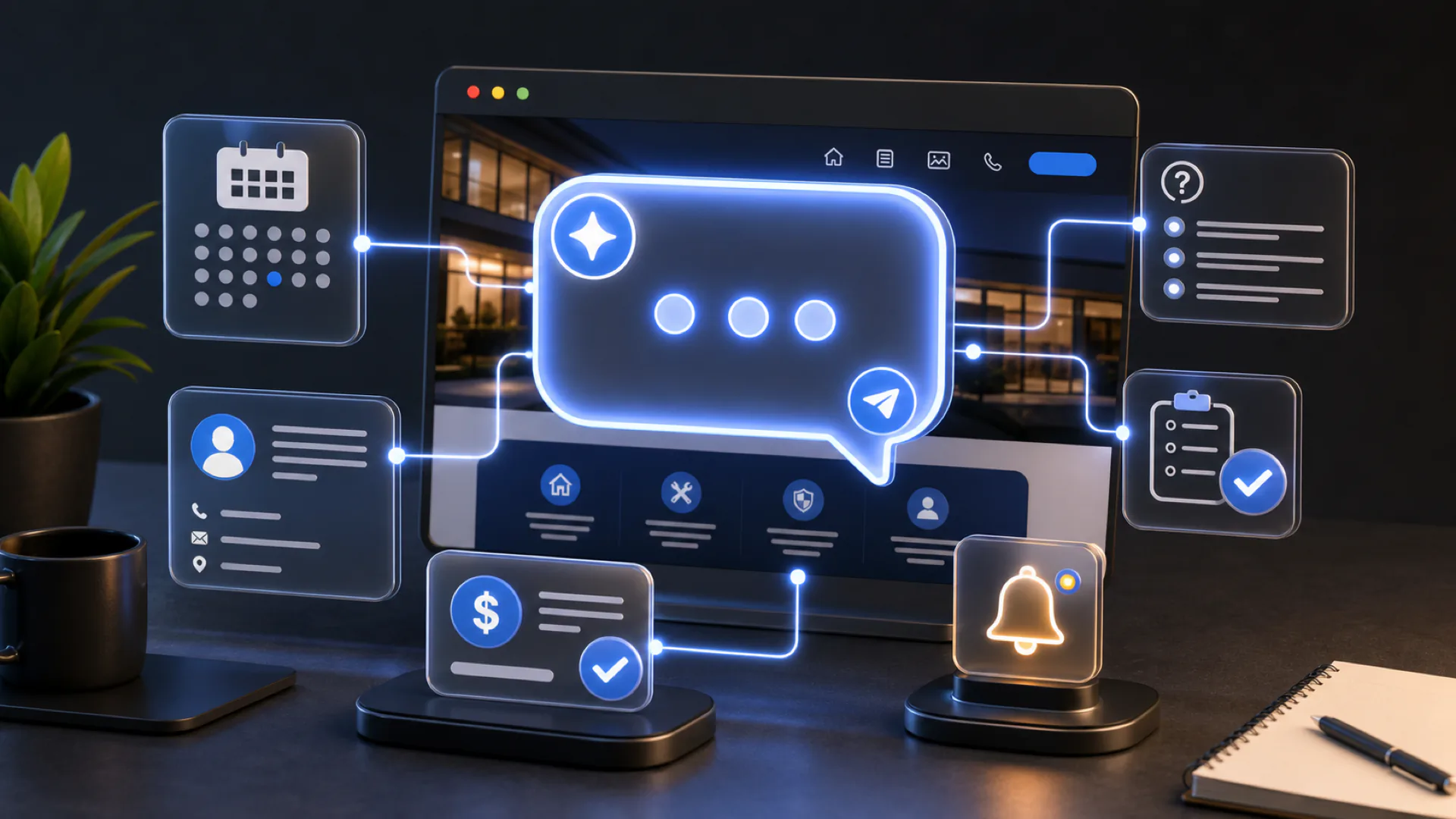
A well-configured AI chatbot trained on your business handles the questions your team gets asked every day: hours, pricing ranges, service areas, how to book, what the process looks like. It does this at 2am on a Sunday just as effectively as it does at noon on a Tuesday.
The return on investment is immediate and measurable: fewer missed inquiries, faster response times, better lead qualification before your team gets involved. For businesses where speed-to-response is a competitive factor — trades, medical, legal, hospitality — the difference between responding in seconds versus hours is often the difference between winning and losing the job.
The important caveat: the chatbot needs to be trained on your specific business. A generic bot that doesn't know your services, your pricing, or your market will frustrate visitors. A custom-trained one that understands your context will feel like a knowledgeable member of your team who never sleeps.
AI voice agents — systems that can answer your business phone, handle common questions, and book appointments — are still early-stage technology, but they're more capable than most people expect.
For trades businesses, service companies, and any business that misses a significant percentage of inbound calls, the value proposition is straightforward: never miss a call, never lose a lead to voicemail. The technology has real limitations for complex conversations, but for first-contact handling and basic qualification, it works well enough to be genuinely worth considering in 2026.
Automated review generation is arguably the least glamorous AI-adjacent tool on this list and arguably the highest ROI. A system that sends the right follow-up to the right customer at the right time — automatically, every time — has a measurable, compounding impact on your local search visibility and your ability to win new customers.
It's not technically AI in the way a chatbot is, but it uses intelligent automation to do something most businesses can't do manually at scale: consistently ask for reviews in a way that works.
CRM systems have been around for decades. What's new in 2026 is AI layered on top — systems that watch how your leads behave (what pages they visit, what emails they open, how long they take to reply) and automatically adjust the follow-up cadence based on signal.
For a small business handling 20-50 leads a month, this is the difference between remembering to follow up with the right people at the right time, and losing warm deals to a busier week. The pipeline runs itself, and your job becomes showing up for the conversations that matter.
Fully autonomous marketing agents — AI systems that run campaigns, adjust budgets, and write ad copy without human oversight — are not reliable enough for most small businesses yet. The tools exist, but the cost of mistakes and the inconsistency of outputs make them more risk than reward right now.
Cheap AI website builders are also worth skipping entirely. They produce generic output that looks generic, and a business's website is too important to be built from a template that ten thousand other companies used this month.
The businesses getting the most out of AI right now are taking a deliberate approach: identify one or two specific pain points, find the right tool for those specific problems, implement it properly, and measure the impact before adding anything else.
Chasing every new AI announcement is a reliable way to spend significant money and end up with nothing working particularly well. Solving one real problem properly — and then the next one — is how you build a business that actually runs better because of AI, rather than just feeling like it probably should.
The goal isn't to use AI. The goal is to grow your business. AI is just the fastest path to a few of those outcomes right now.
Ready to act on this?
Get your Revenue Leak Report + AI homepage preview in minutes — every leak priced in dollars. $29.99, credited toward your first month.
Frequently asked
An AI chatbot on your website is usually the best entry point. Setup cost is low, the ROI is fast (every captured after-hours inquiry pays for months of service), and it doesn't require you to change your daily workflow. Once that's working, you expand to content automation and CRM follow-up.
No — and that's not the goal for most small businesses. The chatbot handles the 70% of questions that are repetitive (hours, pricing, service areas) so your team can focus on the 30% that actually need a human. You end up with faster response times and a less-overloaded team.
If you have a website that gets at least 200 visitors a month and you handle any kind of customer inquiries (calls, emails, form submissions), you're ready. The volume is enough that automation will pay for itself quickly.
We're building 100 complete custom websites for Canadian small businesses, plus 50% off your first month on any plan. Claim a spot before the timer runs out.
 Canadian team